
The Illusion of Luxury
Have you ever scrolled through Pinterest or flipped through a glossy home decor magazine and felt a pang of envy? Those perfectly curated spaces, brimming with unique textures, custom furniture, and stunning art, often come with price tags that make your wallet weep. It seems like creating a home that looks sophisticated and expensive is reserved only for those with unlimited budgets or professional interior designers on speed dial.
But what if I told you that the secret to achieving that high-end look isn’t about how much you spend, but how you spend it? What if you could transform your living space with projects that look incredibly chic and custom-made, yet cost a mere fraction of their designer counterparts?
Prepare to unlock the secrets of savvy decorators who understand the power of DIY. This isn’t just about saving money; it’s about infusing your home with personality, craftsmanship, and a unique story that store-bought items simply can’t tell. We’re about to embark on a journey that proves luxury doesn’t have to be pricey, and that your own two hands can be your most valuable design tool. Get ready to fool even the most discerning eye with these ingenious, budget-friendly DIY home decor projects, all presented in a narrative that will inspire your next home transformation.
The Allure of the Bespoke: Why DIY Trumps Mass-Produced
The appeal of “expensive-looking” decor often lies in its uniqueness, its perceived quality, and the sense that it was crafted with care. Mass-produced items, while convenient, can sometimes lack this soul. DIY, when done thoughtfully, taps directly into that desire for bespoke elegance. You’re not just saving money; you’re creating a one-of-a-kind piece that reflects your personal style and craftsmanship.
Let’s dive into some transformative projects that prove this point, starting with fundamental elements that elevate any room.
Project 1: The Art of the Elevated Wall – Beyond Simple Paint
Paint is the undisputed king of budget transformations, but we can push it further. The secret to making walls look expensive isn’t just a fresh coat of white; it’s about texture and architectural interest.
Imagine walking into a room with elegant wainscoting or detailed trim. It instantly feels grander, more established. This effect is surprisingly simple to replicate with a few strips of pre-primed lattice moulding (the thinnest, flat kind), a miter saw (or a miter box and hand saw), wood glue, and a nail gun (or small finishing nails).
I remember staring at my plain living room walls, dreaming of the Parisian apartments I’d seen in magazines, adorned with classic paneling. The quotes I got for custom millwork were astronomical. Then, an idea sparked. What if I simulated that look? Armed with some inexpensive lattice strips from the hardware store, I carefully measured out symmetrical rectangles on the lower half of my wall. A few precise cuts with a miter box, some wood glue, and a handful of small nails transformed the space. After a quick caulk and a fresh coat of paint, the walls looked like they belonged in a stately home, not a suburban fixer-upper. Every guest comments on the ‘original detailing’!
The Limewash/Roman Clay Effect: Forget perfectly smooth walls. The current trend for high-end homes leans towards subtle texture, a soft, organic depth that paint alone can’t achieve. Limewash or Roman Clay paints offer this beautiful, nuanced finish, but they can be pricey.
Achieve a similar effect with regular matte paint and a specific technique. Choose two shades of paint that are very close in color (e.g., a warm off-white and a slightly darker beige). Apply the lighter color as your base. Then, using a large, round brush or even a sponge, dab and swirl the slightly darker color in random, overlapping strokes over the dry base coat. The key is imperfect, artistic application. The result is a subtle, mottled texture that adds incredible depth and warmth, mimicking expensive artisanal finishes.
Project 2: Furniture Flips – From Drab to Fab with Paint and Hardware
You don’t need to buy new furniture to get a high-end look. Sometimes, all it takes is a fresh perspective, a bit of elbow grease, and a few strategic upgrades.
IKEA furniture is a DIY darling for a reason—it’s a blank canvas. A simple Kallax shelving unit or even a cheap Lack TV unit can be transformed into a piece that looks custom-made.
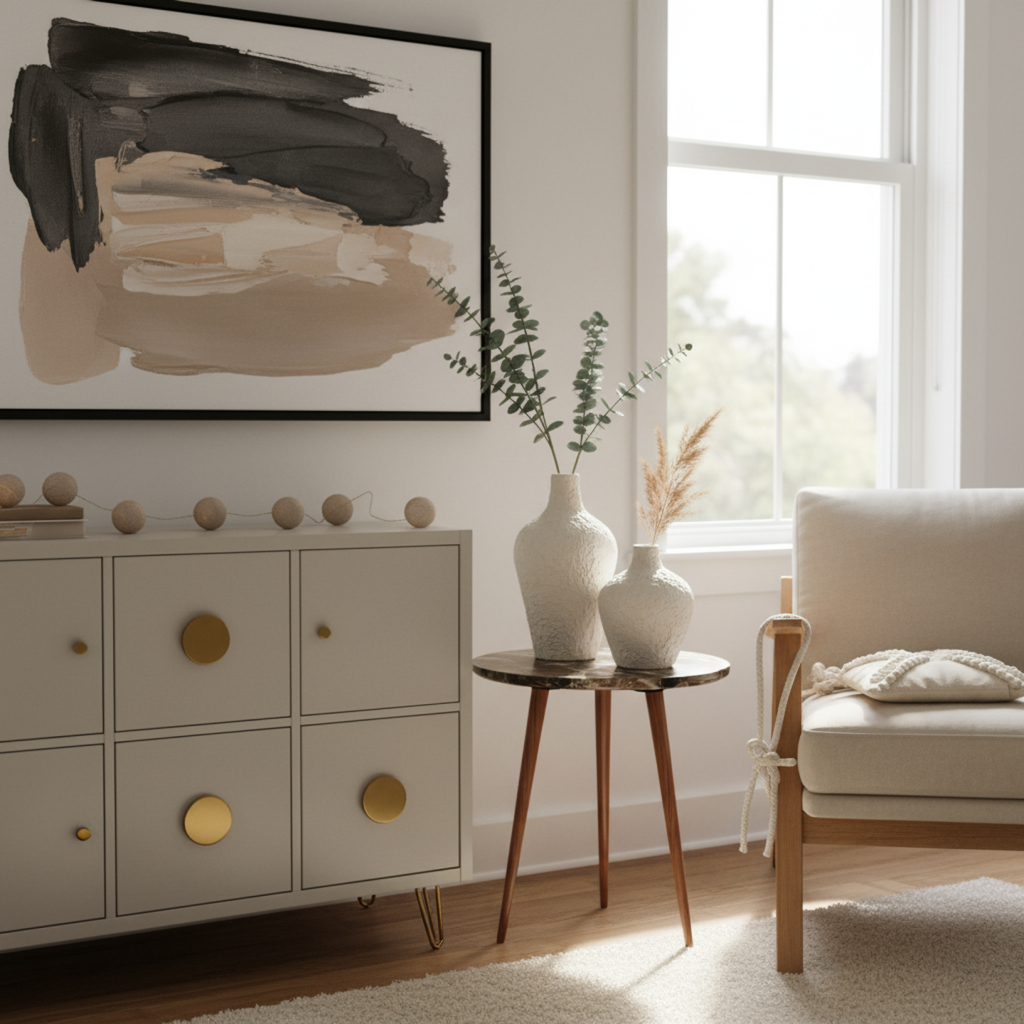
My entryway always felt a little… uninspired. I had an old, basic IKEA Kallax unit that was functional but certainly not fabulous. One rainy weekend, I decided it was time for a glow-up. I started by attaching a piece of thin plywood to the top and sides, securing it with wood glue and small nails. This immediately gave it a thicker, more substantial look. Then came the magic: I painted the entire unit (including the new plywood) a deep, sophisticated charcoal gray with a matte finish. But the real game-changer? I added four sleek, gold-colored hairpin legs and some elegant pull handles to the cubbies that now looked like drawers. The transformation was astounding. It looked like a custom-built console, all for less than the cost of a single designer throw pillow!
The Thrift Store Chair Glow-Up: Don’t walk past that sad-looking wooden chair at the flea market. Its bones might be gold.
Sand it down, apply a rich, dark stain or a vibrant, unexpected paint color (think emerald green or deep navy). Then, for the upholstery, instead of re-upholstering the entire thing (which can be tricky), consider simply buying a beautiful, textured fabric remnant (velvet, boucle, or a sophisticated linen blend) and creating a custom, fitted cushion cover that ties onto the existing seat. This provides a pop of luxury and comfort without a full re-upholstery job.
Project 3: Art & Accessories – The Finishing Touches That Speak Volumes
High-end decor is often characterized by unique, impactful accessories and art. You can achieve this without breaking the bank.
Plain glass vases are cheap and abundant. With a little creativity, they become sculptural art pieces.
I loved the look of those expensive, artisanal ceramic vases—the ones with the beautiful, earthy texture. But my budget screamed ‘plain glass jar.’ So, I decided to create my own. I bought a few inexpensive glass vases from the dollar store. Then, I mixed baking soda into some matte acrylic paint (any color works, but I chose a creamy off-white). The baking soda creates an immediate, thick, textured paste. I applied two coats of this mixture with a paintbrush, dabbing and swirling to enhance the texture. Once dry, I finished it with a clear matte sealant. Paired with some realistic faux eucalyptus branches, these ‘dollar store’ vases now look like something straight out of a high-end boutique, convincing everyone they’re expensive stoneware.
Abstract art can be incredibly expensive, but it’s also one of the easiest to replicate in a way that looks sophisticated, not childish.
Start with a large canvas. Choose a limited color palette—often just two or three harmonious colors, plus white and black. Think deep moody tones, or soft, organic neutrals. Forget complex techniques. Focus on broad strokes, layering, and creating interesting textures. Use a palette knife for impasto effects. Don’t be afraid to paint over mistakes. The goal is depth and visual interest, not a perfect representation. Frame it simply, or even just hang it unframed for a contemporary gallery look. The key is confidence in your strokes and a cohesive color story.
Project 4: Lighting – The Underrated Element of Expensive Design
Lighting can make or break a room’s aesthetic. High-end spaces often boast unique fixtures that act as focal points.
A basic drum pendant light can be given a dramatic, expensive upgrade.
My dining room light was functional, but utterly forgettable. I craved something with more character, perhaps a fabric pendant I’d seen for hundreds of dollars. Instead, I bought a very basic, inexpensive drum pendant kit. The transformation began with a yard of gorgeous, textured linen fabric. I carefully wrapped the fabric around the existing drum shade, securing it with fabric glue and tucking the edges neatly. Then, for a touch of unexpected luxury, I found some inexpensive brass trim at a craft store and glued it around the top and bottom edges of the shade. The result was a custom-looking pendant that cast a warm, inviting glow, and instantly elevated the entire dining area. No one guesses it’s a DIY!
Conclusion: Your Home, Your Masterpiece
The true secret to making your home look expensive on a budget lies in seeing potential where others see limitations. It’s about understanding that quality often comes from craftsmanship, texture, and thoughtful design choices, not just a hefty price tag. By embracing DIY, you’re not just saving money; you’re infusing your home with a personal touch, a story, and a sense of pride that money simply can’t buy.
These projects are more than just crafts; they are statements. They prove that with a little imagination, some basic tools, and a willingness to get creative, you can transform your space into a high-end haven that reflects your sophisticated taste without emptying your bank account. So, grab your paintbrushes, embrace your inner designer, and start creating the expensive-looking home of your dreams – one brilliant, budget-friendly DIY project at a time.